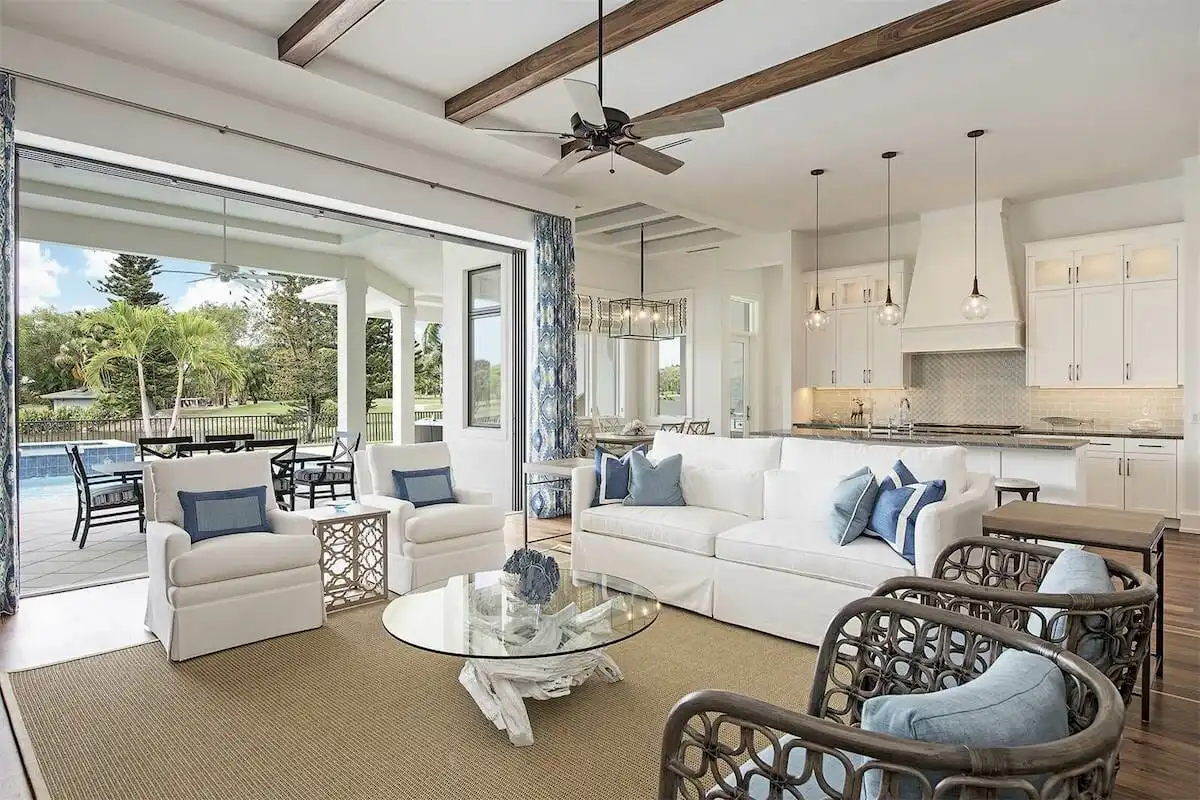
Estate renovation in Palm Beach and Martin Counties requires contractors who understand both luxury finishes and South Florida's specific building requirements. Coastal properties must comply with High Velocity Hurricane Zone (HVHZ) standards, which means impact-rated windows, engineered structural connections, and specific construction methods that differ from standard remodeling.
We provide renovation services for established estates, handling projects that range from kitchen and bathroom updates to complete interior reconfigurations and structural additions. Our work focuses on homes where quality and code compliance are essential, and where homeowners expect professional project management throughout construction.
Many of our clients need to remain in their homes during renovation, which requires careful planning, phased construction, and coordination that minimizes disruption to daily routines.
Signature renovations focus on updating and refining your home without changing its fundamental structure. Kitchen and bathroom remodels form the core of these projects—designer kitchens with custom cabinetry, stone countertops, professional-grade appliances, and layouts that improve functionality. Primary bathrooms become spa-inspired spaces with freestanding tubs, walk-in showers, dual vanities, and premium tile work, while guest bathrooms receive updates to fixtures, finishes, and layouts that complement the home's overall design direction.
Systems upgrades often accompany finish work in signature renovations. Electrical panel replacements and service upgrades support modern appliance loads and smart home integration. HVAC system replacements provide zoned climate control and improved efficiency. Impact-rated window and door installations bring your home into compliance with current HVHZ requirements. Plumbing updates address aging infrastructure with re-piping, fixture replacements, and water treatment systems that improve water quality and pressure throughout the home.
Interior refinements complete the transformation—new flooring in hardwood, tile, or stone throughout living areas, fresh interior paint with proper surface preparation and premium products, lighting upgrades including recessed lighting and statement fixtures with control systems, and hardware and fixture replacements that update the home's aesthetic without structural modifications.These projects typically require 4-6 months depending on scope and whether you remain in the home during construction.
A Signature Renovation is a comprehensive upgrade that preserves your home's structure while elevating its finishes, systems, and comfort to modern luxury standards. These transformations breathe new life into established residences without altering the footprint — preserving your investment while enhancing your daily experience.
Structural reimaginations change how your home lives by modifying interior layouts and flow. Interior wall removal creates open-concept living spaces that better suit contemporary lifestyles. Load-bearing wall modifications with engineered beam installations allow kitchens to expand into adjacent rooms or outdoor spaces. Primary suites can be reconfigured with bathroom expansions and custom closet additions, while rooms are repurposed to match current needs—formal dining rooms becoming home offices, unused spaces transforming into home gyms or media rooms.
Major remodels in this category often involve relocating entire rooms. Complete kitchen relocations require new plumbing, electrical, and ventilation systems routed through different parts of the home. Primary suite additions or complete renovations create retreat spaces where they didn't exist before. Family rooms and living spaces expand to accommodate larger gatherings or entertainment systems. These modifications require careful engineering to ensure structural integrity and code compliance throughout the transformation.
Building systems must be redesigned to serve modified floor plans. Whole-home electrical system upgrades provide adequate capacity and proper circuit distribution for new room configurations. HVAC systems are redesigned to maintain comfort in spaces with different volumes and uses. Plumbing routes change to serve bathrooms and kitchens in new locations. Smart home systems integrate throughout modified spaces, requiring coordination between structural work and low-voltage installations.
These projects generally require 6-9 months depending on complexity and permit approval schedules.
Custom additions expand your home's footprint with new construction that integrates seamlessly with existing structure. Square footage expansions include new bedroom suites with private bathrooms and walk-in closets, home office additions with separate entry access for business use, guest quarters or in-law suites with kitchen facilities and independent living areas, garage expansions that accommodate growing vehicle collections, and second-story additions where feasible within zoning and HOA constraints.
Outdoor living structures extend your usable space into Florida's favorable climate. Covered terraces and outdoor living rooms provide weather-protected entertainment areas. Outdoor kitchens feature cooking stations, refrigeration, and dining areas that rival interior spaces in finish quality. Pool houses provide bathroom facilities, changing areas, and storage for pool equipment and furniture. Cabanas and pool bath additions create resort-style convenience, while screen enclosures and patio covers make outdoor spaces more comfortable year-round.
Integration challenges make additions complex—new construction must connect structurally with existing foundations and roof systems while maintaining architectural consistency with your home's established style. All work must meet current HVHZ building codes, which may be more stringent than codes in place when your home was originally built. Exterior finishes must match or thoughtfully complement existing materials, requiring careful attention to stucco texture, paint color, roofing materials, and architectural details that tie old and new construction together visually.
These projects usually require 8-12 months from design through completion.
Most renovation work in Palm Beach and Martin Counties requires building permits, particularly when involving structural changes, electrical or plumbing systems, or exterior modifications. Many communities also require HOA architectural review board approval before work can begin.
Permit timelines vary—typically 8-16 weeks depending on the municipality and project complexity. We manage this process but cannot guarantee approval timelines as they depend on government agencies and review boards.
Some projects require multiple permits (building, electrical, plumbing, mechanical) which may be processed sequentially rather than simultaneously, affecting overall timeline.
If you're staying in your home during construction, we coordinate work to maintain livable spaces. This typically means working on one area while keeping others functional, establishing designated construction access points separate from your living areas, and implementing dust containment measures.
However, renovation in an occupied home takes longer than vacant construction—typically 20-30% more time—and involves some unavoidable disruption. Construction noise occurs during normal work hours (typically 7:30am-4:30pm weekdays). Dust containment reduces but doesn't eliminate construction dust. Access to certain areas will be restricted during active work phases. Temporary inconveniences are common (kitchen setups during kitchen renovation, shared bathrooms during bathroom work).
We're transparent about these tradeoffs during planning so you can make informed decisions about whether to remain in your home or relocate temporarily during construction.
Renovation often uncovers hidden conditions—outdated wiring behind walls, concealed water damage in subfloors, termite damage in framing members, or code-compliance issues in existing systems that must be addressed.
We maintain contingency reserves (typically 10-15% of budget) to address these situations without derailing the project. When unexpected conditions arise, we document them with photos, explain the issue and why it needs addressing, present remediation options with cost implications, and provide timeline impact assessment before proceeding.
You make the decisions about how to proceed; we provide the information needed to make them. However, some issues must be addressed to meet code requirements or ensure structural safety—you can't simply choose to leave dangerous conditions unrepaired.
We provide regular updates throughout construction including weekly progress reports during active construction, advance notice of upcoming work that may be particularly disruptive, coordination of material selections and installations, and prompt communication about any issues or changes that arise.
You'll have direct contact with project management rather than working through multiple layers of communication. Questions get answered quickly, and concerns are addressed as they arise rather than waiting for scheduled meetings.
Palm Beach and Martin Counties enforce High Velocity Hurricane Zone (HVHZ) standards that require specific construction methods and materials. Renovation work must meet current codes, even when your home was built under less stringent requirements.
HVHZ Requirements Include:
Impact-rated windows and doors tested to withstand wind-borne debris. Engineered structural connections for roof-to-wall and wall-to-foundation attachments. Specific fastening schedules for roofing, sheathing, and exterior cladding. Hurricane straps, clips, and reinforcement hardware. Wind-rated garage doors and entry systems.When we renovate, all new work meets current HVHZ standards. In some cases, this means upgrading existing elements that don't meet current codes—for example, replacing non-impact windows when modifying wall openings, or upgrading roof attachments when adding to the structure.These requirements add cost compared to standard remodeling, but they're mandatory in coastal counties and provide meaningful protection during storm events.
We collaborate with your preferred architects, interior designers, and design professionals throughout the renovation process. Many of our clients have established relationships with designers who understand their aesthetic preferences and lifestyle needs, and we value these partnerships.
Our role in these collaborations is providing constructability input during design development—helping ensure that design intent can be built within budget and code requirements—and then managing construction to realize the design vision accurately.
We also maintain relationships with luxury architects, interior designers, and design specialists throughout Palm Beach and Martin Counties if you need recommendations. Whether you bring your own team or work with our network, collaborative design development ensures your renovation reflects your personal style while meeting structural, code, and budget requirements.
The strength of an ICF residence is most appreciated in markets where architecture, privacy, and permanence are not preferences — they are requirements. Our work is focused exclusively in the coastal and estate enclaves where structural integrity and long-term asset preservation matter most.



"Lorem ipsum dolor sit amet, consectetur adipiscing elit. Etiam mattis orci vel odio mollis lacinia. Sed ultrices arcu vel mi sollicitudin congue. Aliquam in varius metus, non pellentesque nibh. Cras odio sapien."

"Lorem ipsum dolor sit amet, consectetur adipiscing elit. Etiam mattis orci vel odio mollis lacinia. Sed ultrices arcu vel mi sollicitudin congue. Aliquam in varius metus, non pellentesque nibh. Cras odio sapien."
“Lorem ipsum dolor sit amet, consectetur adipiscing elit. Mauris efficitur dolor imperdiet, varius augue quis, viverra felis. Curabitur tristique odio sed molestie dapibus. Praesent bibendum vitae sapien eu volutpat."

.svg)

Renovation timelines depend on project scope and whether you remain in the home during construction. Signature renovations involving kitchen and bathroom updates typically require 4-6 months. Structural reimaginations with layout changes and major remodels generally take 6-9 months. Custom additions with new square footage usually span 8-12 months from design through completion.
These timelines assume normal permitting schedules of 2-4 months. Occupied home renovations take 20-30% longer than vacant construction due to phasing requirements and daily cleanup protocols.
Common delays include HOA approval waiting periods, permitting revisions, custom material lead times, hidden condition remediation, and weather during exterior work phases.
Yes, though it requires understanding the tradeoffs. We can phase construction to keep portions of your home functional—maintaining one bathroom while renovating others, or providing temporary kitchen setups during remodels.However, occupied renovations involve unavoidable disruptions. Construction noise occurs during work hours (7:30am-4:30pm weekdays). Dust persists despite HEPA filtration and barriers. Workers access your home daily. The pace is 20-30% slower because we work around your schedule and maintain livable spaces.Some projects are difficult in occupied homes: complete kitchen remodels without alternative cooking, electrical panel replacements requiring power shutdowns, mold remediation requiring evacuation, and work leaving the home unsealed to weather.We discuss these realities upfront so you can decide if staying makes sense for your project and tolerance for disruption.
Our project minimum is $150,000, reflecting the specialized expertise required for estate-level work in Palm Beach and Martin Counties.
Signature renovations typically range from $200-400 per square foot. Kitchen renovations run $150,000-$300,000+ depending on size and finishes. Primary bathrooms cost $100,000-$200,000+. Guest bathrooms start around $75,000-$100,000.
Structural reimaginations typically cost $300-500 per square foot, involving engineering fees, load-bearing modifications, and systems rerouting.
Custom additions range from $400-600+ per square foot. Integration with existing structures costs more than new construction due to matching requirements and connection complexity.
Actual costs depend on material selections, structural work extent, existing system conditions, and hidden issues discovered during demolition. We recommend 10-15% contingency for unexpected conditions common in estate renovations.
Most likely, yes. Building permits are required for structural work (wall removal, beam installations), electrical work beyond fixture replacement, plumbing changes, HVAC modifications, exterior changes, and any square footage additions.
HOA communities typically require architectural review board approval even for work that doesn't need municipal permits—exterior colors, landscaping, and visible alterations affecting neighborhood aesthetics.
Permitting takes 8-16 weeks depending on jurisdiction and project complexity. Some municipalities process faster than others based on staffing and workload.
We handle permit applications, coordinate with building departments, and schedule inspections. However, we don't control approval timing—these depend on government agencies and HOA boards.
Yes, we work with clients' architects and interior designers regularly. Many of our clients have established relationships with design professionals who understand their preferences, and we value these collaborations.
Our role is providing constructability input during design development—ensuring architectural vision translates into buildable reality within budget and code constraints—then executing construction to match design intent accurately.
We attend design meetings when helpful, review drawings for constructability issues, provide cost feedback to prevent budget surprises, and suggest alternatives when designs encounter code or feasibility challenges.
If you don't have design relationships, we can recommend architects and interior designers we've worked with successfully in Palm Beach and Martin Counties. The choice is yours—we adapt to your preferred collaboration model.
Discovering hidden issues is common in established homes, particularly in Florida's coastal climate. Common conditions include outdated wiring, concealed water damage, termite damage, inadequate structural support, mold growth, corroded plumbing, and HVAC ductwork problems.
Our process when issues arise: stop work to assess the problem, document thoroughly with photos, consult engineers if needed for structural issues, present findings with clear explanation, provide remediation options with costs and timeline impacts, and obtain written approval before proceeding.
We never perform work beyond agreed scope without your consent. However, some issues must be addressed to meet code requirements or ensure safety—building departments may require remediation before work continues.
This is why we recommend 10-15% budget contingency. Not every project encounters surprises, but many do. Unused contingency can redirect to upgrades or return at completion.
We implement several strategies to reduce impact, though some disruption is inherent to renovation.
Phased construction completes one area before starting another—renovating one bathroom fully before starting a second. Work hours are typically 7:30am-4:30pm weekdays, with no weekend work without approval.
Dust containment includes sealed barriers with zippered access, HEPA filtration during demolition, daily vacuuming of work areas, and floor protection on walking paths. We designate separate construction entry from living spaces where possible and organize on-site storage for materials.
Communication includes advance notice of disruptive work, daily briefings about upcoming tasks, and prompt updates on schedule changes. Jobsites are cleaned daily with regular debris removal.
However, occupied renovation inherently involves construction noise, some dust despite containment, workers in your home, restricted access to work areas, and temporary inconveniences. We're candid about what we can control versus what's inherent to quality renovation work.
Estate renovation requires specialized expertise beyond standard remodeling.
HVHZ compliance is mandatory for coastal Palm Beach and Martin County properties, requiring impact-rated windows, engineered structural connections, and wind-resistant construction methods that standard remodelers often don't understand.
Luxury finishes demand experienced installation—natural stone book-matching, custom millwork precision, imported tile techniques, and high-end fixtures where mistakes are expensive to correct.
Systems complexity exceeds typical residential work. Whole-home audio, sophisticated lighting control, security systems, and pool automation must integrate during renovation. HVAC and electrical systems often need substantial upgrades.
HOA requirements in estate communities impose strict standards for exterior changes, materials, construction hours, and contractor insurance. Occupied renovation management requires higher cleanliness standards, noise mitigation, and privacy respect.
Project scale typically involves multiple simultaneous renovations—kitchen, multiple bathrooms, systems upgrades, and outdoor additions—requiring substantial project management capacity.
Contractors without estate experience may create code issues, finish quality problems, or management failures that are expensive to remediate.


.svg)


