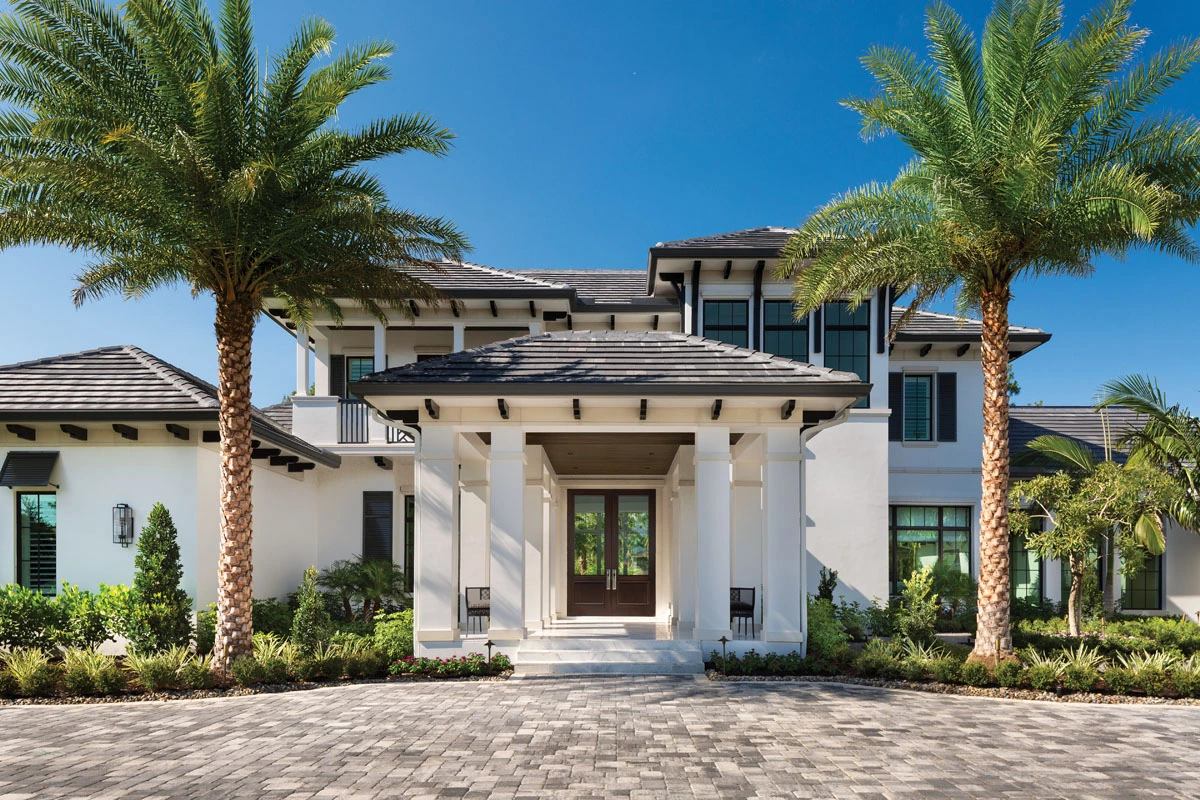
Building a custom home in coastal South Florida requires construction methods that address the region's unique challenges: hurricane exposure, high humidity, and extreme temperatures. ICF (Insulated Concrete Form) construction uses reinforced concrete walls that provide structural advantages over traditional wood-frame building.
Unlike wood-frame homes, ICF construction uses interlocking foam blocks filled with steel-reinforced concrete. This creates walls that are stronger, more energy-efficient, and better suited to South Florida's coastal climate. For homeowners building in Palm Beach or Martin Counties, ICF offers practical benefits that wood-frame construction cannot match.
While ICF costs more initially—typically 5-10% above premium wood-frame construction—the structural and performance advantages often justify the investment for families planning to own their home long-term.
ICF walls are engineered to withstand high winds—typically designed for 200+ mph when properly engineered and installed. Combined with impact-rated windows and appropriate roofing, ICF construction provides substantial storm protection for coastal properties.
The reinforced concrete core with steel rebar creates a monolithic structure that resists wind-driven debris and maintains integrity during extreme weather. This differs fundamentally from wood-frame construction, which relies on numerous connections between separate members that can fail under extreme loads.
However, no construction method is completely hurricane-proof. Even with ICF walls, your home's overall storm resistance depends on multiple factors: roof design and installation, window and door ratings, garage door strength, and how well all components are integrated and connected.
The insulating properties of ICF construction reduce heating and cooling loads. While actual savings vary by home size, orientation, and usage patterns, many ICF homeowners report noticeable reductions in utility costs compared to similarly-sized traditional homes.
The foam insulation on both sides of the concrete core creates thermal mass that moderates temperature swings. Air conditioning systems cycle less frequently because the building envelope doesn't gain and lose heat as rapidly as wood-frame construction with standard insulation.
In South Florida's climate, where cooling represents the primary energy expense, this thermal performance translates to measurable cost savings over time. The magnitude varies based on home design, window placement, and personal comfort preferences.
Concrete mass combined with foam insulation reduces exterior noise transmission significantly more than wood-frame construction. This is particularly noticeable in areas near roadways, commercial activity, or neighboring properties.
The difference becomes apparent immediately upon entering an ICF home. External sounds—traffic, lawn equipment, neighboring activity—become substantially muted. This acoustic performance creates a quieter interior environment without requiring additional soundproofing measures.
It's worth noting that sound reduction works both ways. Noises from inside your home also don't escape as easily, which can affect how outdoor entertaining or pool activities are audible from inside.
Reinforced concrete resists moisture intrusion, termite damage, and mold growth better than wood framing. ICF walls don't rot, warp, or deteriorate over time, which can reduce long-term maintenance requirements.
In Florida's coastal climate, where humidity, salt air, and occasional tropical weather create challenging conditions for wood structures, concrete provides inherent advantages. There are no wood structural members to rot when moisture penetrates. Termites cannot damage concrete. Mold requires organic material to grow, which concrete doesn't provide.
This durability means the structural envelope should remain sound indefinitely with minimal intervention, though roof, windows, and interior finishes still require normal maintenance regardless of wall construction method.
Concrete and foam construction provides better fire resistance than wood framing. ICF walls typically provide several hours of fire exposure resistance, though specific performance depends on wall thickness and assembly details.
This fire resistance provides additional safety for occupants and can affect insurance considerations, though the primary focus in coastal Florida remains hurricane protection rather than fire risk.
ICF construction follows a specific sequence that differs from traditional framing. After your foundation is complete, interlocking foam blocks are stacked to form walls. Steel rebar is placed vertically and horizontally within the foam forms for reinforcement. Concrete is then pumped into the forms, filling the cavity between foam faces.
Once the concrete cures—typically 3-7 days depending on weather conditions—the foam remains in place permanently as insulation. The foam faces provide attachment points for interior drywall and exterior finishes, similar to wood studs in traditional construction.
The wall installation phase often moves quickly—typically 2-4 weeks for most homes—but requires specialized contractors experienced with ICF systems. Not all builders work with ICF, so selecting a contractor with demonstrated ICF experience is important.
After walls are complete, construction proceeds similarly to traditional homes: roof installation, interior finishes, mechanical systems, and exterior details. The main difference is in the structural envelope itself.
ICF construction requires planning before concrete is poured. Window and door openings must be precisely located because modifications after concrete cures are difficult and expensive. Electrical and plumbing rough-in requires different techniques than wood-frame construction, as conduits and boxes are positioned before concrete placement.
This makes thorough design development critical. Changes that would be relatively simple in wood-frame construction—moving a window location, adding an outlet, relocating a door—become costly modifications once concrete is poured.
Working with architects and contractors experienced with ICF helps avoid these issues. Detailed planning during design prevents expensive change orders during construction.
For homeowners with specific design requirements, we provide design-build services for fully custom ICF homes. This process typically takes 18-24 months from initial design through completion and allows complete control over layout, finishes, and architectural details.
Custom projects begin with site evaluation and architectural planning, proceed through permitting and engineering, and continue through construction and final finishes. We work with your architect or can recommend design professionals experienced with coastal construction and ICF building methods.
The advantage of custom construction is getting exactly what you want. The tradeoff is time—nearly two years from start to completion—and the need for numerous decisions throughout design and construction phases.
Occasionally we have ICF homes under construction or recently completed that are available for purchase. These homes are built to the same construction standards as custom projects but follow our design direction rather than being customized for a specific buyer.
Available homes offer faster occupancy—typically within a few months rather than the 18-24 month custom timeline—though design flexibility is limited to finish selections rather than fundamental layout changes.
If you're interested in available homes, contact us to learn about current or upcoming inventory. Availability varies as homes are completed and sold.
ICF construction typically adds 5-10% to total construction costs compared to premium wood-frame building. For a home with a $500 per square foot construction budget, this translates to roughly $25-50 per square foot additional cost for ICF walls instead of wood framing.
This cost difference reflects higher material prices for ICF blocks and concrete, as well as specialized labor requirements. However, some costs are lower with ICF—separate insulation installation isn't needed, and wall assembly can be faster than traditional framing in some cases.
Whether the investment makes sense depends on your priorities and ownership timeline. Many homeowners value the storm protection and long-term durability. Others prefer to invest additional budget in other areas of the home—larger square footage, upgraded finishes, or enhanced site amenities.
We can provide detailed cost comparisons during the planning phase, showing exactly where ICF adds cost and how it affects overall project budget.
We utilize Nudura ICF systems for our projects. Nudura blocks consist of two layers of expanded polystyrene (EPS) foam insulation with concrete poured between them, resulting in walls that are typically 6-12 inches thick depending on design requirements.
The interlocking block design simplifies installation while providing consistent insulation performance. The system accommodates standard electrical boxes, plumbing penetrations, and window/door openings through integrated accessories designed specifically for the Nudura system.
Nudura's engineering support and product consistency help ensure proper installation and performance. The system meets Florida Building Code requirements and Miami-Dade hurricane provisions when properly engineered and installed.
Successful ICF construction requires coordination between architects, structural engineers, and contractors from the beginning of the design process. We work with design professionals to ensure architectural vision translates into buildable reality within budget and code constraints.
This coordination addresses ICF-specific considerations during design development: wall thickness implications for floor area calculations, opening locations and sizes for proper structural performance, mechanical system routing through chase walls, and finish attachment methods for various materials.
By involving construction expertise during design rather than after drawings are complete, we help prevent expensive redesign or field modifications that compromise either design intent or structural performance.
The strength of an ICF residence is most appreciated in markets where architecture, privacy, and permanence are not preferences — they are requirements. Our work is focused exclusively in the coastal and estate enclaves where structural integrity and long-term asset preservation matter most.



"Lorem ipsum dolor sit amet, consectetur adipiscing elit. Etiam mattis orci vel odio mollis lacinia. Sed ultrices arcu vel mi sollicitudin congue. Aliquam in varius metus, non pellentesque nibh. Cras odio sapien."

"Lorem ipsum dolor sit amet, consectetur adipiscing elit. Etiam mattis orci vel odio mollis lacinia. Sed ultrices arcu vel mi sollicitudin congue. Aliquam in varius metus, non pellentesque nibh. Cras odio sapien."
“Lorem ipsum dolor sit amet, consectetur adipiscing elit. Mauris efficitur dolor imperdiet, varius augue quis, viverra felis. Curabitur tristique odio sed molestie dapibus. Praesent bibendum vitae sapien eu volutpat."

.svg)

ICF homes may qualify for various resilience programs and grants, though eligibility depends on specific program requirements and your location. FEMA and state programs periodically offer incentives for disaster-resistant construction, particularly in high-risk coastal areas.
We recommend checking with local emergency management offices and your insurance agent about current programs. Some Florida counties offer expedited permitting or fee reductions for homes exceeding minimum hurricane standards. Property insurance discounts through wind mitigation credits represent the most common financial benefit for ICF construction in Florida.
These programs change periodically based on federal and state funding priorities, so what's available today may differ from future options.
Yes, ICF construction qualifies for standard construction-to-permanent loans from most lenders. However, some lenders are more familiar with ICF than others, which can affect approval process smoothness.
Working with lenders experienced with custom home construction in your area typically produces better results. They understand ICF's cost structure and can accurately evaluate project budgets and timelines. Some lenders initially question the higher construction costs until they understand ICF's market acceptance and resale value in coastal markets.
We can provide references to construction lenders familiar with ICF projects in Palm Beach and Martin Counties. Having an experienced lender prevents delays and misunderstandings during the approval process.
ICF's impact on resale value depends on multiple factors including location, overall home quality, market conditions, and buyer priorities at sale time.
In coastal markets where hurricane protection matters to buyers, ICF can be a positive differentiator. Some buyers specifically seek concrete construction and are willing to pay premiums for it. Others prioritize location, finishes, or layout over construction method.
Market data on ICF resale premiums is limited because ICF represents a small percentage of custom homes. Anecdotal evidence suggests well-designed ICF homes maintain strong resale value, but attributing this solely to construction method versus other factors like location and quality is difficult.
What's clear is that ICF doesn't harm resale value in luxury markets, and it provides selling points that appeal to safety-conscious and quality-focused buyers.
Yes, ICF construction supports large window openings and open floor plans with proper engineering. The reinforced concrete provides excellent structural strength for wide spans and large openings.
However, openings must be planned during design because modifying concrete walls after construction is difficult and expensive. Large window walls require engineered headers and proper load transfer around openings. Floor-to-ceiling glass walls are achievable with ICF, but require careful structural design.
Open floor plans work well with ICF because load-bearing capacity allows longer spans between supports. This enables great rooms, open kitchens, and flowing spaces without numerous columns or bearing walls interrupting the design.
The key is incorporating these design elements during planning rather than attempting modifications after walls are poured.
Adding onto an ICF home is possible but requires careful engineering to connect new construction to existing structure. The connection details between new and existing concrete walls, foundation tie-ins, and roof integration need structural engineering.
Many homeowners choose to build additions using ICF to match existing construction, though this isn't mandatory. Some add wood-frame additions to ICF homes when budget constraints or timing priorities favor conventional construction methods.
The most important consideration is planning for potential future additions during initial design. Including foundation provisions, utility rough-ins, or structural connections for anticipated additions costs little during initial construction but saves substantially compared to retrofitting later.
If you're considering an ICF home and anticipate future expansion, discuss this during design so provisions can be incorporated economically.
We design ICF homes with interior chase walls inside the exterior ICF walls, which means running wires is business as usual—just like conventional construction. These chase walls provide standard stud bays for electrical, low-voltage, and plumbing runs without requiring anything to penetrate the concrete.
For exterior-mounted fixtures like lights, outlets, hose bibs, or cable entry points, installers use a hot knife to cut through the foam facing. The foam cuts easily with standard heated tools, allowing fixture installation without cutting concrete. This works for initial construction and for any future additions or modifications.
Cable, internet, and phone service installations after construction follow the same process—technicians cut through foam with hot knives to run new lines. Most service providers in our area are familiar with this process on ICF homes.
The chase wall approach gives you the flexibility of conventional construction for running wires and mounting fixtures, while maintaining ICF's structural and insulation benefits. Interior outlets, switches, and fixtures install exactly like traditional homes because they're in the chase walls, not the concrete walls.
This is why thorough electrical and low-voltage planning during design remains important—while adding new runs is possible, it's easier to include provisions during construction than to retrofit later.
Yes, ICF homes typically feel different in several noticeable ways. The temperature stability is apparent—ICF homes don't experience the rapid temperature swings that wood-frame homes do when AC cycles off or on hot afternoons.
The sound quality changes. The quietness is immediately noticeable when you step inside—external noises become substantially muted. Some people find this peaceful; others initially notice the different acoustic environment until they adjust.
The walls feel solid and substantial. There's no flex or movement when you lean against walls or close doors firmly. The mass and rigidity of concrete creates a sense of permanence that differs from wood-frame construction.
Humidity control is often easier because the building envelope is tighter and less prone to infiltration. This can mean drier interior conditions that feel more comfortable in Florida's humid climate.
These differences aren't better or worse universally—they're simply different from what most people are accustomed to in wood-frame homes.
We understand that seeing ICF construction firsthand helps with the decision process. For clients seriously considering ICF construction, we can arrange opportunities to see ICF homes during construction phases where the wall system is visible before finishes are applied.
Seeing exposed ICF walls during construction demonstrates the foam block system, steel reinforcement placement, and concrete installation process in ways that finished homes cannot show. Understanding what's behind your walls helps appreciate the construction method's benefits.
For completed homes, we occasionally have available inventory homes that prospective clients can tour. These showcase how ICF homes look and feel when finished, including the sound reduction, temperature stability, and overall quality that ICF construction provides.
Additionally, there are ICF home tours and builder open houses periodically in South Florida where multiple ICF projects are accessible to potential buyers. We can notify you when these events occur in Palm Beach or Martin Counties.
The best approach is contacting us to discuss your timeline and interest level. For clients moving toward a building decision, we prioritize arranging relevant tours that help inform your construction method choice.


.svg)


